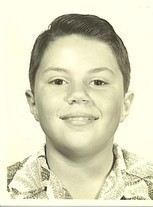
John Charles Yavorsky was born Nov. 1, 1921, in Belle Plaine, Iowa. After graduating from the University of Notre Dame, he joined the Navy and was commissioned as a naval officer and naval aviator.
During World War II, he was assigned to the aircraft carrier Saratoga in the Pacific.
Flying the revolutionary F6F Hellcat, which played a key role in enabling the Navy to establish air superiority in the Pacific, Mr. Yavorsky specialized in night flights.
As a night fighter pilot, he underwent a 29-week training program and learned to fly based on instruments, radio communication and early radar systems.
During 14 months in the Pacific, he made two emergency landings, one on the carrier and the other on land, his daughter said.
"When he got out of the plane on the carrier, one of his buddies had to tackle him to keep him from running off the edge of the carrier," his daughter said. Because of the darkness, Mr. Yavorsky couldn't get his bearings and assumed he was positioned lengthwise rather than pointing toward the side of the deck.
Some of the pilots in his squadron were lost because their planes ran out of fuel and they were unable to find their carrier in the dark, Mr. Yavorsky told his son-in-law, Dean Knuth, a retired Navy captain.
"Normal day fighters received 300 extra hours of training," Knuth said. "Night fighters received 900 extra hours of training. They wore red goggles on the ship at night so that they could be ready to fly at night at any time."
Mr. Yavorsky's plane, which weighed 14,000 pounds when fully loaded, carried six rockets, six bombs and six 50-caliber machine guns.
At the end of the war, Mr. Yavorsky was assigned to the aircraft carrier Bonhomme Richard. When he left active duty, he studied law at the University of Iowa, where he met his future wife, nursing student JoAnne Fillenwarth. They were married in 1948, when he earned his law degree.